What Type of Mulch Is Best for Homeowners in Clinton?
For most homeowners in Clinton, Ohio, natural hardwood mulch or locally made True Mulch is the best overall choice because it protects soil, holds moisture, reduces weed growth, and gives landscape beds a clean finished look.
If curb appeal is the main goal, black mulch or double dark brown mulch may be the better choice. These darker mulch colors create stronger contrast around flower beds, shrubs, walkways, and front foundation landscaping.
B-Sharp Property Maintenance in Clinton offers True Mulch, bulk mulch pickup, mulch delivery, and professional mulch installation for homeowners and commercial properties in Clinton, Green, Akron, North Canton, Massillon, Canal Fulton, New Franklin, Jackson, and nearby Northeast Ohio communities.
Why Mulch Type Matters for Clinton Homeowners
Mulch is not only a decorative layer. It is part of the landscape system around soil, plant roots, shrubs, trees, flowers, and hardscape borders.
The right mulch helps slow soil moisture loss, limit weed germination, reduce erosion, and moderate soil temperature around plant roots.
The wrong mulch, or the wrong mulch depth, can create maintenance problems. Too much mulch can block air and water movement. Mulch piled against tree trunks can hold moisture against bark and increase the risk of decay.
This is why homeowners should choose mulch by material, color, depth, location, and project size.
Best Overall Mulch for Clinton Homes
Natural hardwood mulch is the best all-purpose mulch for most Clinton homes.
It works well around foundation beds, shrubs, perennial beds, flower beds, tree rings, and general landscape borders.
Hardwood mulch gives a natural appearance, breaks down over time, and fits well with traditional Ohio homes, wooded lots, brick homes, stone borders, and neutral siding colors.
For homeowners who want a natural look and practical soil coverage, hardwood mulch is usually the safest choice.
Best Local Option: True Mulch from B-Sharp Property Maintenance
True Mulch is B-Sharp Property Maintenance’s locally made mulch product.
B-Sharp describes True Mulch as made from 100 percent tree material with no fillers, chemicals, or dyes in the natural product.
This makes it a strong option for homeowners who want a wood-based mulch for flower beds, shrubs, trees, and general landscape maintenance.
B-Sharp sells True Mulch by the cubic yard. Homeowners can use it for pickup, delivery, or professional installation depending on the size of the project.
For Clinton homeowners, buying mulch locally also helps with practical issues such as product availability, delivery scheduling, and quantity estimates.
Best Mulch Color for Curb Appeal
Mulch color affects how the entire property looks from the street.
The best color depends on the home exterior, plant selection, walkway materials, edging, stonework, and surrounding lawn.
Black Mulch
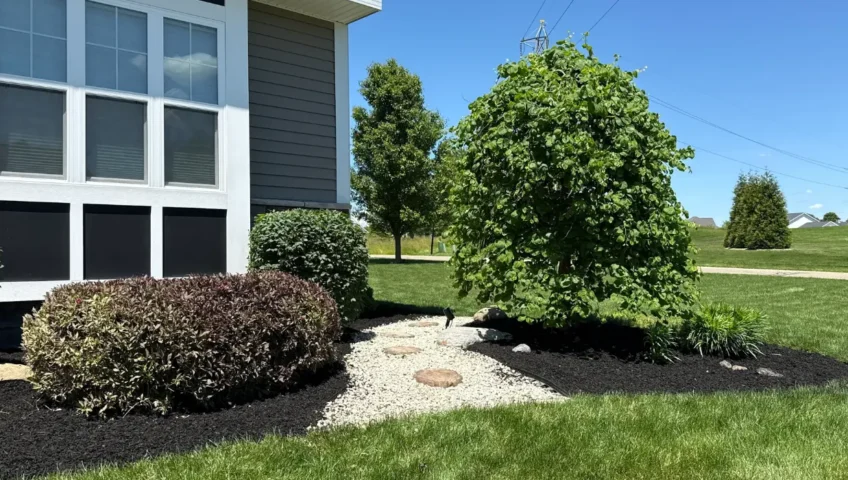
Black mulch is best for strong contrast and a clean modern look.
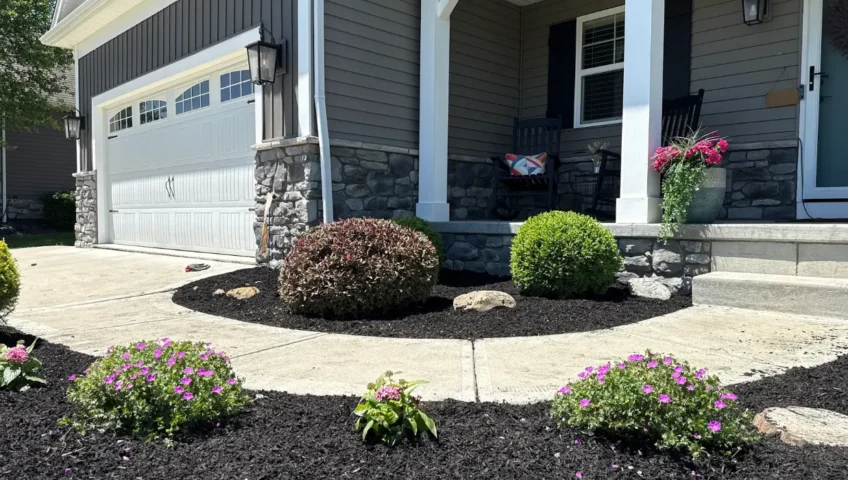
It works well around light-colored siding, white trim, gray stone, bright flowers, and front entry beds.
Black mulch can make plants stand out because the dark background creates visual separation between foliage, flowers, and soil.
It is a good choice for homeowners who want a polished front-yard appearance.
Brown Mulch
Brown mulch is best for a natural and balanced landscape style.
It works well around traditional homes, wooded properties, neutral siding, mature shrubs, perennial beds, and natural stone borders.
Brown mulch blends more softly with soil and tree bark. It also looks less bold than black mulch, which can make it a better fit for homeowners who prefer a classic yard.
For many Clinton properties, premium brown mulch or double dark brown mulch gives the right balance between curb appeal and natural appearance.
Red Mulch
Red mulch is best for bold color contrast.
It can work well with some brick homes, commercial beds, and landscape designs that need a stronger color statement.
However, red mulch does not fit every property. It can look too strong beside certain siding colors, roof tones, or natural plantings.
Homeowners should compare red mulch against the home exterior before choosing it for a full-yard project.
Natural Mulch vs Dyed Mulch
Natural mulch and dyed mulch serve different goals.
Natural hardwood mulch is best when the homeowner wants a more organic appearance and soil-focused function.
Dyed mulch is best when the homeowner wants stronger color consistency and a more finished visual look.
Enhanced black, brown, and red mulch can improve curb appeal around front beds and commercial landscapes. The main decision is whether the homeowner values a natural look or a stronger color effect.
Before buying dyed mulch, homeowners should ask what material is used and whether the dye is suitable for landscape use.
Best Mulch for Flower Beds
The best mulch for flower beds in Clinton is natural hardwood mulch, premium brown mulch, double dark brown mulch, or black mulch.
Flower beds need even coverage, proper depth, and clean spacing around plant stems.
A mulch layer helps protect exposed soil and reduce weed pressure. It also helps the bed look organized after planting annuals, perennials, shrubs, or ornamental grasses.
The key is to avoid burying low-growing plants. Mulch should sit around the plant area, not over the crown or against delicate stems.
Best Mulch for Trees and Shrubs
Natural hardwood mulch or brown mulch is usually the best choice around trees and shrubs.
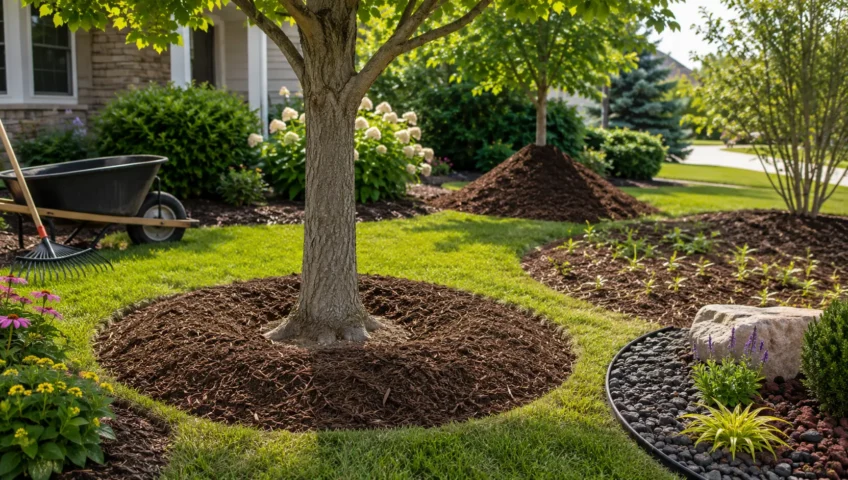
Tree mulch should be applied as a wide ring, not as a pile against the trunk.
The root flare should stay visible. Mulch should not touch the bark.
This matters because bark is not designed to stay wet under mulch. When mulch is piled against a trunk, it can trap moisture, invite insects, and contribute to decay.
A proper mulch ring also protects tree roots from mower damage and string trimmer damage.
Best Mulch for Front Yard Landscaping
Black mulch, double dark brown mulch, and enhanced brown mulch are strong options for front yard curb appeal.
Front yard beds usually include foundation plants, walkway borders, mailbox beds, porch landscaping, and driveway edges.
These areas affect first impressions, so the mulch should look clean, consistent, and matched to the home.
Black mulch works well for contrast. Brown mulch works well for natural design. Double dark brown mulch works well when the homeowner wants a richer look without choosing full black.
Best Mulch for Low-Maintenance Landscaping
The best mulch for low-maintenance landscaping is mulch that is installed at the right depth over a properly prepared bed.
Material matters, but preparation matters too.
A low-maintenance mulch project should include weed removal, debris cleanup, clean edging, proper depth, and even spreading.
If weeds remain under the mulch or bed edges are not defined, the mulch will not look clean for long.
For homeowners who want less yard work, professional mulch installation can be more practical than hauling and spreading bulk mulch alone.
Bulk Mulch vs Bagged Mulch
Bulk mulch is usually better for full-yard projects.
It is sold by the cubic yard and works well for multiple flower beds, tree rings, large front beds, commercial beds, and seasonal landscape refreshes.
Bagged mulch can work for small touch-ups, container areas, or one small bed.
The problem with bagged mulch is quantity. A normal yard can require many bags, which means more hauling, more plastic waste, and more handling.
For Clinton homeowners with several beds, bulk mulch is usually the more practical option.
How Much Mulch Does a Clinton Home Need?
Mulch is usually measured in cubic yards for bulk orders.
Use this simple formula:
Length in feet x width in feet x depth in inches ÷ 324 = cubic yards needed
For example, a bed that is 20 feet long and 10 feet wide equals 200 square feet.
At 2 inches deep, that bed needs about 1.23 cubic yards of mulch.
At 3 inches deep, the same bed needs about 1.85 cubic yards.
Most home landscape beds need about 2 to 3 inches of mulch. A light refresh may need less if old mulch is still present. Bare soil or new beds may need a fuller layer.
Best Mulch Depth for Home Landscape Beds
For most flower beds and shrub beds, 2 to 3 inches of mulch is a practical target.
A thinner layer may not cover soil well enough. A thicker layer can limit air and water movement if it becomes excessive.
More mulch is not always better.
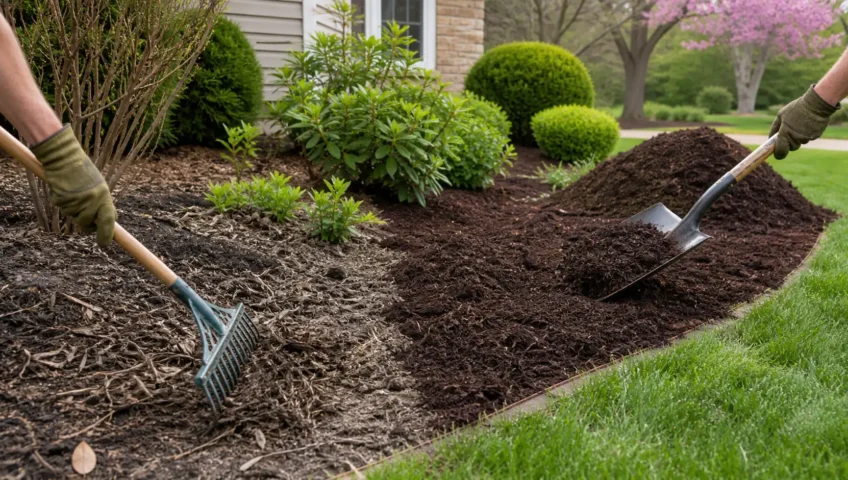
Before adding new mulch, check the existing layer. If old mulch is already thick, rake it, loosen it, or remove excess material before adding more.
Around trees, keep mulch away from the trunk and avoid mulch volcanoes.
Should You Remove Old Mulch First?
You do not always need to remove old mulch before adding new mulch.
If the old mulch is thin, clean, and decomposing normally, a light refresh can restore the bed.
If the old mulch is matted, too thick, moldy, sour-smelling, or piled against plants, it should be loosened, reduced, or removed.
The goal is not to stack mulch every year. The goal is to maintain the right depth and keep air, water, and plant crowns protected.
When Is the Best Time to Mulch in Clinton, Ohio?
Spring is the most common time to mulch in Clinton and Northeast Ohio.
Spring mulch helps clean up winter-worn beds, reduce early weed pressure, protect exposed soil, and improve curb appeal before the growing season.
Summer mulch refreshes can help restore color and support moisture retention during dry periods.
Fall mulch can help protect soil and roots before winter. It also improves property appearance after leaf cleanup.
For many homeowners, the best schedule is a spring installation with light maintenance later in the season if needed.
When Professional Mulch Installation Makes Sense
Professional mulch installation makes sense when the project includes more than spreading mulch.
Many yards need bed cleanup, weed removal, edge cutting, debris removal, shrub-area detail work, and final cleanup around sidewalks and driveways.
A professional crew can also help with consistent depth. This matters because uneven mulch looks messy and can create plant health issues.
Professional installation is especially useful for larger homes, sloped beds, commercial properties, rental properties, and homeowners who do not want to haul wheelbarrow loads of mulch.
B-Sharp offers mulch delivery and full-service mulch installation for local homeowners and businesses.
How to Choose the Right Mulch for Your Home
Choose natural hardwood mulch or True Mulch if you want the best all-purpose option.
Choose black mulch if you want strong contrast and a modern front-yard look.
Choose brown mulch if you want a natural, classic, and balanced landscape appearance.
Choose double dark brown mulch if you want a richer finish while keeping a natural tone.
Choose red mulch only when it clearly matches the home’s brick, siding, stone, or design style.
Choose bulk mulch for medium and large projects.
Choose professional installation when the beds need cleanup, edging, delivery, and even spreading.
Common Mulch Mistakes to Avoid
Many mulch problems come from installation, not from the mulch itself.
Avoid these common mistakes:
- Buying only by price without checking material quality
- Ordering too little mulch
- Applying mulch too deep
- Piling mulch against tree trunks
- Covering plant crowns
- Skipping weed removal before installation
- Ignoring bed edging
- Choosing a color that clashes with the home
- Using bagged mulch for a large project
- Forgetting to plan the delivery drop location
A good mulch project starts with the right material and ends with proper placement.
Why Buy Mulch Locally in Clinton?
Buying mulch locally helps homeowners get better service, easier pickup, and more practical delivery options.
A local supplier understands the timing of Northeast Ohio landscaping projects.
Spring bed cleanup, summer refreshes, fall leaf cleanup, and winter preparation all affect when homeowners need mulch.
B-Sharp Property Maintenance is located at 6161 South Main St in Clinton, Ohio. This makes it a local option for Clinton homeowners and nearby communities in Summit County and surrounding areas.
The company also offers related landscaping products and services, including topsoil, wood chips, leaf compost, firewood, professional landscaping, professional mulching, hardscaping, snow and ice removal, and property maintenance.
Final Recommendation
For most Clinton homeowners, natural hardwood mulch or B-Sharp’s locally made True Mulch is the best overall choice.
For front-yard curb appeal, black mulch or double dark brown mulch may be the best fit.
For a classic landscape, brown mulch is usually the safest color choice.
For large projects, bulk mulch with delivery or professional installation is more practical than buying individual bags.
If you need help choosing mulch for your home, call B-Sharp Property Maintenance at 330-882-1999 to ask about current mulch availability, pickup, delivery, pricing, and installation.
Frequently Asked Questions
What is the best mulch for homes in Clinton, Ohio?
Natural hardwood mulch is the best all-purpose mulch for most Clinton homes. It works well around flower beds, shrubs, trees, and foundation landscaping.
Is black mulch or brown mulch better?
Black mulch is better for strong contrast and modern curb appeal. Brown mulch is better for a natural and classic landscape appearance.
Is red mulch a good choice?
Red mulch can be a good choice for some brick homes and bold landscape designs. It is not the best match for every property style.
What is True Mulch?
True Mulch is B-Sharp Property Maintenance’s locally made mulch product. B-Sharp describes it as made from 100 percent tree material.
How deep should mulch be?
Most landscape beds should have about 2 to 3 inches of mulch. Around trees, keep mulch away from the trunk and avoid mulch volcanoes.
Should mulch touch tree trunks?
No. Mulch should not touch tree trunks. Keep the root flare visible and leave space between the mulch and the bark.
Is bulk mulch better than bagged mulch?
Bulk mulch is better for medium and large projects. Bagged mulch works better for very small touch-ups.
Does B-Sharp offer mulch delivery in Clinton?
Yes. B-Sharp offers mulch pickup and delivery options from its Clinton location. Call to confirm current availability, delivery pricing, and scheduling.
Can B-Sharp install mulch for me?
Yes. B-Sharp offers professional mulch installation for homeowners and businesses that want delivery, spreading, bed coverage, and cleanup handled by a crew.
When should I mulch in Northeast Ohio?
Spring is the most common time to mulch. Summer works for refreshing faded beds. Fall works for soil coverage and root protection before winter.