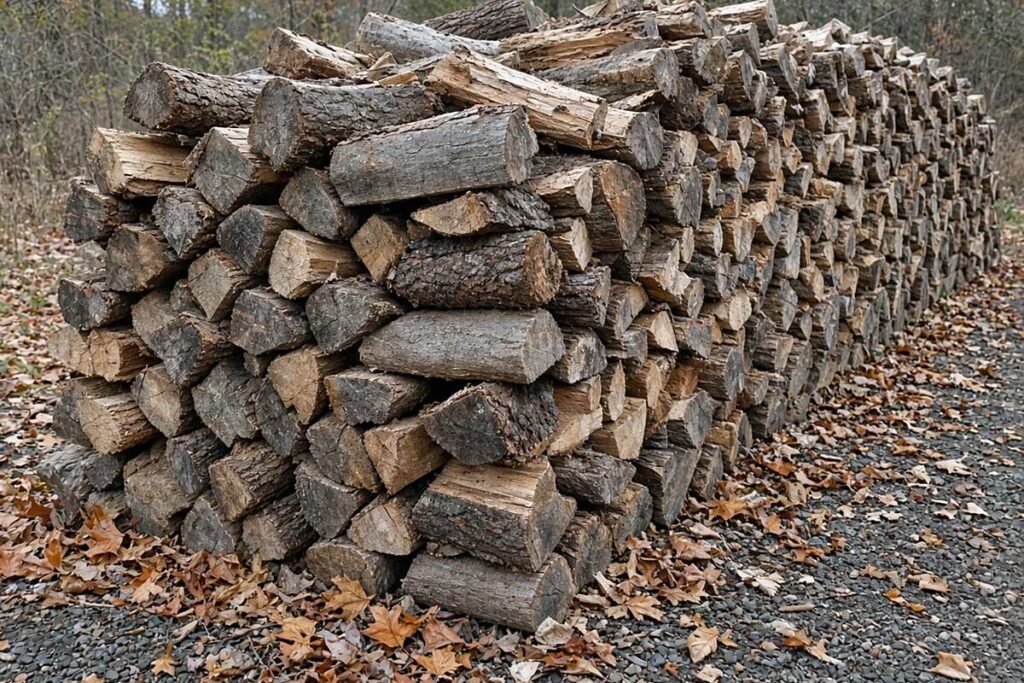
Which local woods burn hottest and longest
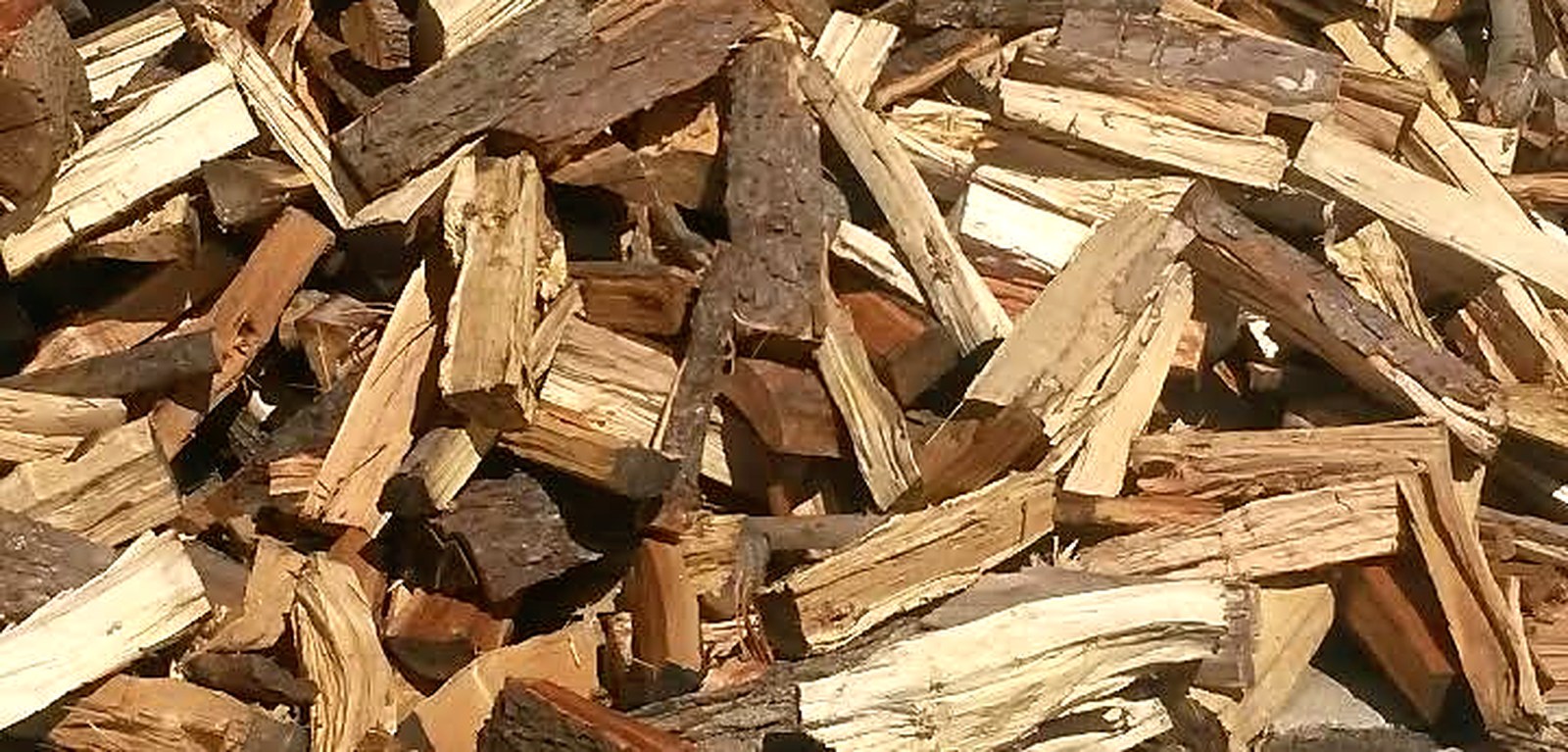
Not all firewood burns the same. Heavier, denser woods like oak, hickory and black locust pack more heat into every cord and burn longer, with better coals. Lighter woods like poplar, basswood and pine light fast and burn out quickly, which makes them good kindling. This chart compares the trees most common around Northeast Ohio so you can see what you’re getting.
How to read it: Density is the weight of dry wood (pounds per cubic foot). Janka hardness is how hard the wood is (pounds of force). Heat is the approximate million BTUs in one full cord of seasoned wood (about 20% moisture). Wet wood gives off much less heat, so always burn seasoned firewood.
| Wood | Density (lb/ft³, dry) | Janka hardness (lbf) | Heat (million BTU/cord) | How it burns |
|---|---|---|---|---|
| White oak Quercus alba | 47.0 | 1,350 | 29.1 | Top choice. Slow, long, hot burn with great coals. Needs a full 1–2 years to season. Other sources: 26.5 (Illinois Ext., white/bur oak group), 24.6 (WNC chart) |
| Bur oak Quercus macrocarpa | 45 | 1,360 | 26.2 | Excellent heat and coals, low smoke. Season well. |
| Northern red oak Quercus rubra | 43.8 | 1,220 | 24.6 | Excellent all-around firewood. Long burn, few sparks. Seasons slower than most. Other sources: Illinois Ext.: 24.4 (red/black oak group) |
| Black oak Quercus velutina | 45 | 1,210 | 24.6* | Burns like red oak: hot, long, good coals. Other sources: *Red oak group figure (NJ Forest Service); no separate black oak figure found |
| Shagbark hickory Carya ovata | 50 | 1,880 | 27.5 | One of the hottest local woods. Great coals and a classic smoky aroma. Tough to split. Other sources: Illinois Ext.: 28.6 |
| Bitternut hickory Carya cordiformis | 46 | 1,500 | 26.7 | Very hot, clean burn with excellent coals. |
| Black locust Robinia pseudoacacia | 48 | 1,700 | 27.9 | Very hot and long-burning, low smoke. Hard to split; can pop. Other sources: Illinois Ext.: 28.1; Kansas: 28.3 |
| Honey locust Gleditsia triacanthos | 47 | 1,580 | 26.7 | Hot, clean burn and easy to split. Excellent coals. |
| Hophornbeam (ironwood) Ostrya virginiana | 49 | 1,860 | 27.9 | Very dense, very hot. Hard to split. |
| Sugar maple (hard maple) Acer saccharum | 44.0 | 1,450 | 25.0 | Excellent heat, steady burn, good coals. Splits fairly easily. Other sources: Illinois Ext.: 23.7; Kansas: 24.0 |
| Red maple (soft maple) Acer rubrum | 38 | 950 | 18.7 | Good shoulder-season wood. Lights easily, burns faster than hard maple. Other sources: WNC chart: 20.1 |
| Silver maple (soft maple) Acer saccharinum | 33 | 700 | 19.0 | Fair heat, burns fairly quickly. Fine for fall and spring fires. |
| White ash Fraxinus americana | 42 | 1,320 | 26.6 | Excellent. Splits easily and seasons faster than oak. Low smoke. Other sources: Utah State Ext.: 24.2 |
| Green ash Fraxinus pennsylvanica | 40 | 1,200 | 20.0 | Very good, easy to split, seasons quickly. Other sources: Illinois Ext.: 23; Kansas: 22.8 |
| Black cherry Prunus serotina | 35.0 | 950 | 20.4 | Good heat with a pleasant aroma. Easy to split, seasons quickly. Other sources: WNC chart: 19.3 |
| Black walnut Juglans nigra | 38 | 1,010 | 22.2 | Good heat, low smoke, easy to split. Other sources: Illinois Ext.: 22.3; Kansas: 21.8 |
| American elm Ulmus americana | 35 | 830 | 20.0 | Good heat once dry, but stringy and hard to split. |
| Sycamore Platanus occidentalis | 34 | 770 | 19.5 | Moderate heat. Very hard to split. Other sources: Illinois Ext.: 20.7 |
| Lighter woods, for comparison | ||||
| Yellow-poplar (tulip poplar) Liriodendron tulipifera | 29 | 540 | 15.0 | Light wood. Good kindling, burns fast, little coal. Other sources: WNC chart: 16.4 |
| Eastern cottonwood Populus deltoides | 28 | 430 | 15.8 | Light and quick-burning. Season very well first. |
| Basswood (linden) Tilia americana | 26.0 | 410 | 13.8 | Lowest heat on this list. Kindling or quick fires only. |
| Eastern white pine Pinus strobus | 25 | 380 | 15.6 | Softwood. Great kindling, burns fast; more creosote, so keep the chimney clean. |
Sources: Density and Janka hardness: The Wood Database (dry weight and side hardness at 12% moisture, based on USDA Forest Products Laboratory data). Heat per cord (about 20% moisture): Nebraska Forest Service, Heating With Wood (Table I); for sugar maple, red maple, white ash, black oak and yellow-poplar, NJ Forest Service, Forestry Notes: Firewood Heat. Comparison figures: University of Illinois Extension, Utah State University Extension and Kansas State Research & Extension. Published heat values vary with moisture and the way a cord is measured, so treat all figures as approximate. Background: USDA Forest Products Laboratory, Wood Handbook (FPL-GTR-282).
See our Firewood page for crate sizes and delivery, or visit b-sharp.us.